The Jersey Devil: The Cryptid of the Pine Barrens
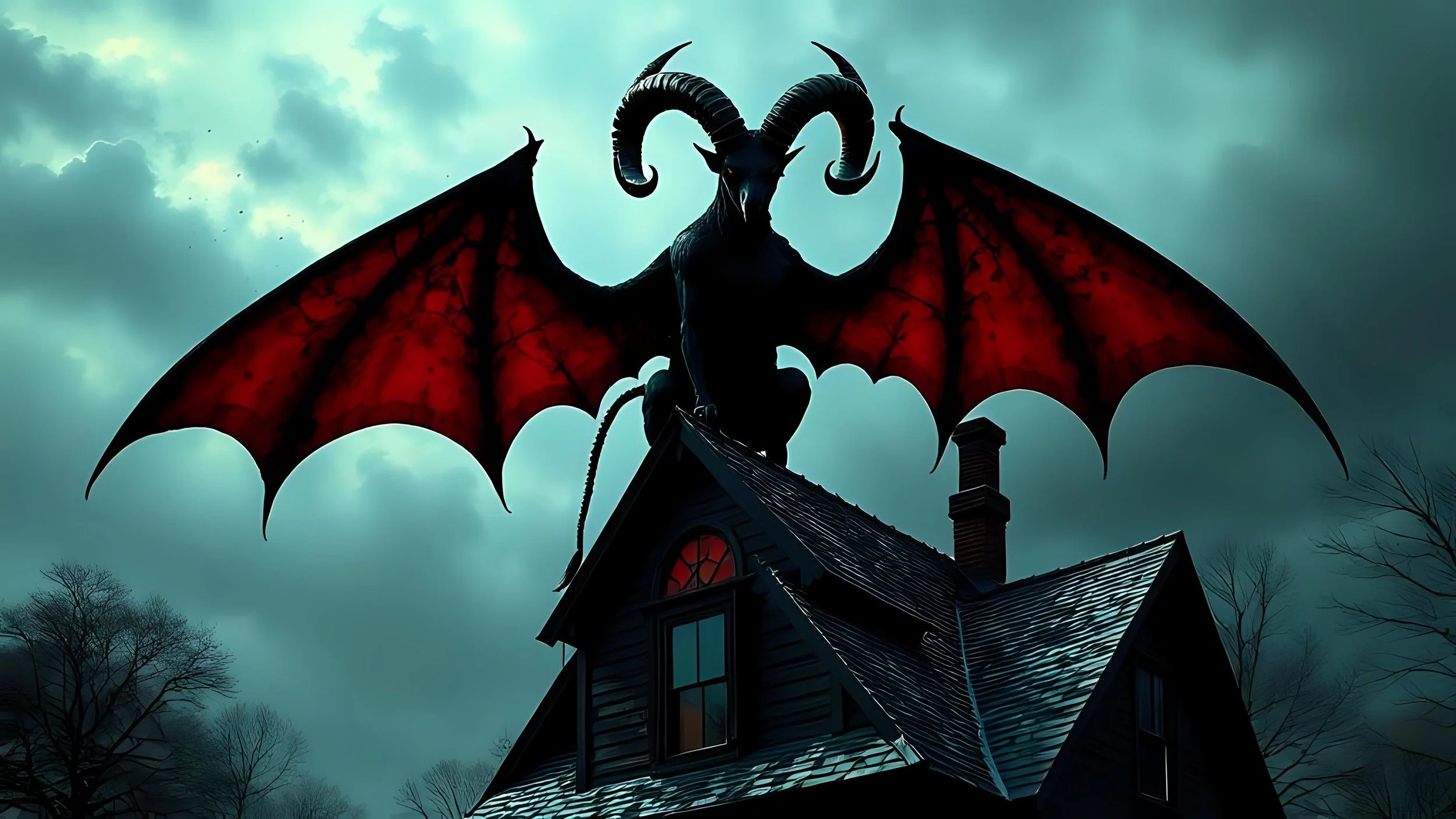
For more than 250 years, stories of a strange creature have emerged from the forests of NJ...
The Legend
Somewhere beneath the whispering pines of southern New Jersey, there is a story that refuses to die. For generations, people have entered the dark forests, lonely roads, and scattered communities of the Pine Barrens and returned with stories of something they could not explain. They described a creature unlike anything known to inhabit the region—a thing with the head of a horse, the wings of a bat, the hooves of an animal, claws like a predator, and a long tail disappearing into the darkness. They called it the Jersey Devil.To some, it is nothing more than an old colonial legend, a story born from superstition and passed from one generation to the next. To others, the legend is a distorted memory of something real—an animal, a phenomenon, or perhaps a creature that science has never identified. The story begins more than three centuries ago, with a woman known as Mother Leeds and a child who, according to legend, was never meant to be born. But the story doesn't end there. Centuries after the supposed birth of the creature, people were still claiming to see it. In January 1909, those reports exploded into one of the strangest episodes in American cryptid history. Newspapers across the region carried stories of mysterious footprints, strange cries, frightened witnesses, and a creature reportedly moving through the night. Thousands of people became fascinated—and many became genuinely frightened. Search parties went into the woods. Police investigated reports. Newspapers followed the story almost daily. Strange footprints appeared in the snow, and witnesses described an animal that seemed to possess characteristics belonging to several different creatures at once. And then, as quickly as the panic had begun, it faded. But the Jersey Devil never truly went away.Even today, reports occasionally emerge from the forests and rural communities of southern New Jersey. The descriptions vary. The circumstances change. The witnesses disagree. Yet the same question remains:What, exactly, have people been seeing?
Perhaps the answer is buried somewhere in the history of the Pine Barrens.Perhaps it is hidden within the psychology of folklore and human perception.Perhaps every sighting has an ordinary explanation.Or perhaps the legend exists because, somewhere in the darkness, there really is something we have not yet explained.This is the legend of the Jersey Devil.The History
To understand the Jersey Devil, it is necessary to begin with the place where the legend tookroot. The Pine Barrens cover a large portion of southern New Jersey. Historically, the region was difficult country—heavily forested, sandy, sparsely populated, and filled with swamps, streams, bogs, and isolated settlements. It was not the sort of landscape that encouraged easy travel. For centuries, the Pine Barrens existed somewhat apart from the rapidly developing communities along New Jersey's coast and the Delaware River. People who lived there developed industries around the resources of the forest and surrounding wetlands. Iron production, charcoal making, glass manufacturing, cranberry cultivation, lumbering, and other industries brought people into the region. But the Pine Barrens remained wild. Even today, parts of the region can feel remarkably remote despite being surrounded by one of the most densely populated areas of the United States. That isolation matters when examining the Jersey Devil.Before modern roads, electric lighting, automobiles, smartphones, and instant communication, entering a forest at night was a very different experience. A person walking through the Pine Barrens could hear animals moving through vegetation without seeing them. An owl could sound surprisingly close. A fox could produce a scream that seemed completely unnatural to someone unfamiliar with it. Shadows could transform familiar objects into strange shapes. And stories flourish in places where the unfamiliar meets the imagination.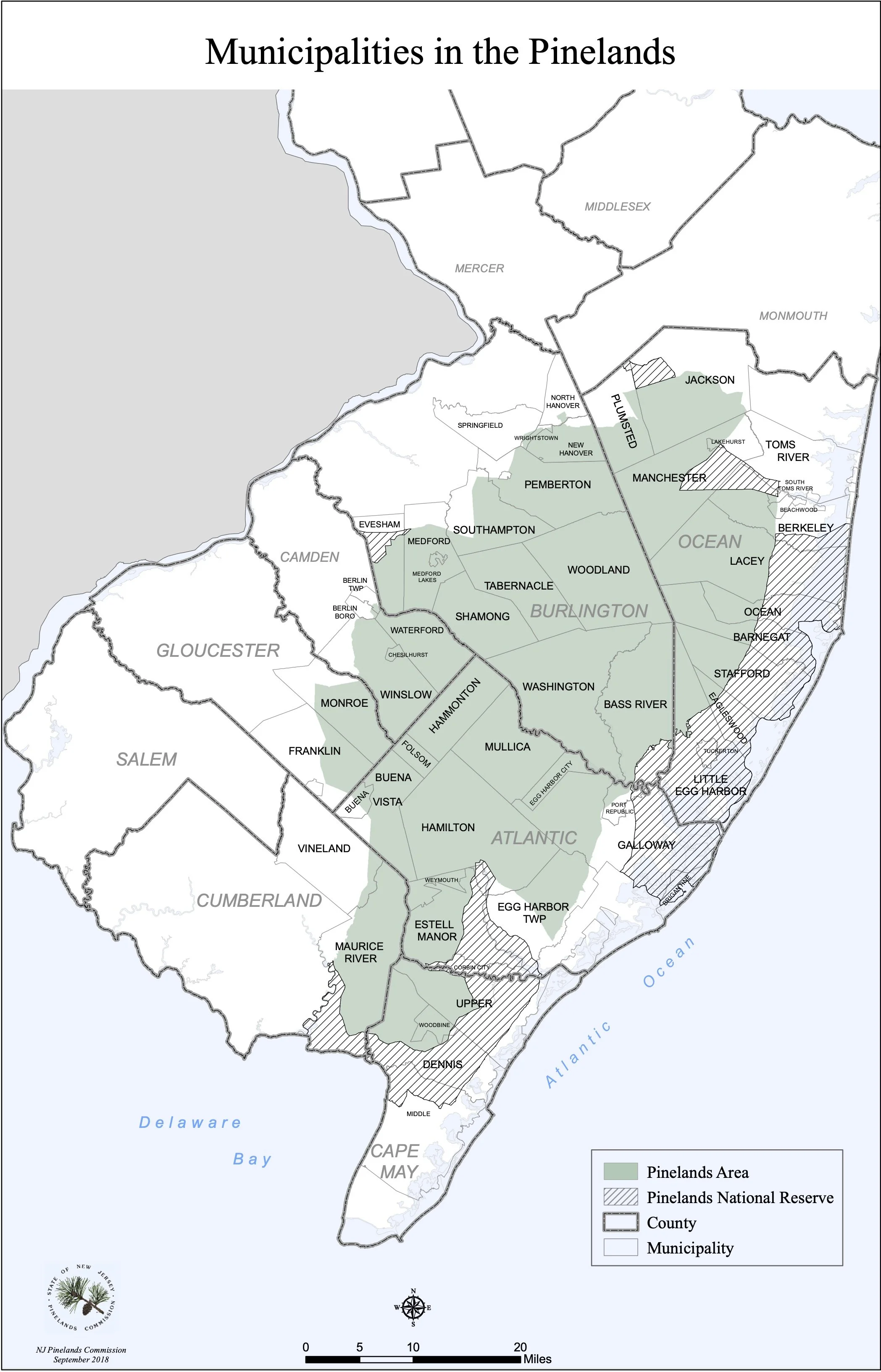
Pine Barrens demographics
The Pinelands National Reserve covers approximately 1.1 million acres, about 22% of New Jersey's land area, across seven counties and 56 municipalities.
Population: Nearly 500,000 people live within the Pinelands National Reserve.
Population density: Extremely uneven. The interior can have fewer than 10 people per square mile, while developed communities along the edges can exceed 4,000 people per square mile.
Counties: Atlantic, Burlington, Camden, Cape May, Cumberland, Gloucester, and Ocean.
Municipalities: All or portions of 56 municipalities fall within the Reserve.
Land ownership: Approximately 50% is publicly owned and 50% privately owned, including homes, farms, businesses, corporations, and nonprofit properties.
Economy: Agriculture is particularly important, especially cranberries and blueberries, along with recreation, resource-based industries, construction around the periphery, and shell fishing.
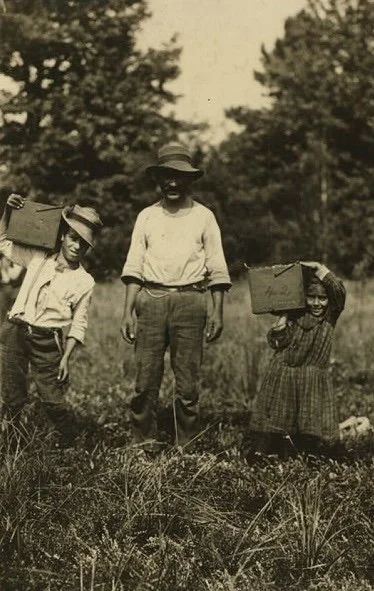
The People in the Pine Barrens
The Pine Barrens are not an empty wilderness. Nearly half a million people live within the broader Pinelands National Reserve, spread across dozens of communities. Yet within that populated landscape are vast stretches of forest, wetlands, and remote interior territory where population density can fall below ten people per square mile.
That contrast is part of what makes the region such a compelling setting for the Jersey Devil. Civilization is never completely absent—but it can feel very far away.
Mother Leeds
At the center of the Jersey Devil legend is a woman traditionally known as Mother Leeds.According to the most famous version of the story, Mother Leeds lived in the Pine Barrens with her twelve children. She was poor, exhausted, and pregnant once again. The thirteenth pregnancy supposedly caused despair. When labor began during a stormy night, Mother Leeds allegedly cursed the unborn child, declaring that if she was going to have another child, it would be the Devil. The child was born. At first, according to the legend, it appeared to be an ordinary baby.Then something changed. The newborn supposedly developed hooves, claws, wings, horns, and a long tail. The creature then rose into the air, flew through the chimney, and disappeared into the surrounding wilderness. The child became the creature later known as the Jersey Devil. It is a dramatic story. It is also almost certainly impossible to establish in the form in which it is commonly told. The problem is that the Mother Leeds story exists in numerous versions, and the details change depending on who tells it and when. Some versions identify the mother as Deborah Leeds. Some place the story in different locations. Some alter the circumstances surrounding the birth. Others incorporate religious themes, witchcraft, curses, or supernatural events that appear to have been added or modified over time. This is not unusual for folklore.Stories rarely remain unchanged for centuries. A tale begins with one event—or perhaps simply one person telling another a frightening story—and then evolves. Details are forgotten. New details are added. Names change. Places become more dramatic. A strange event becomes a supernatural event. Eventually, the story becomes larger than whatever originally inspired it. That may have happened with the Jersey Devil.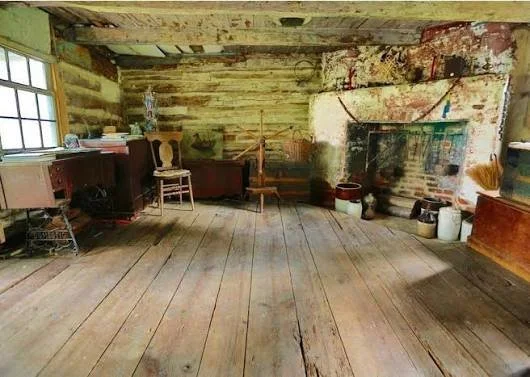
The Leeds Family Home
It’s where Mother Leeds gave birth to the infamous child the Jersey Devil
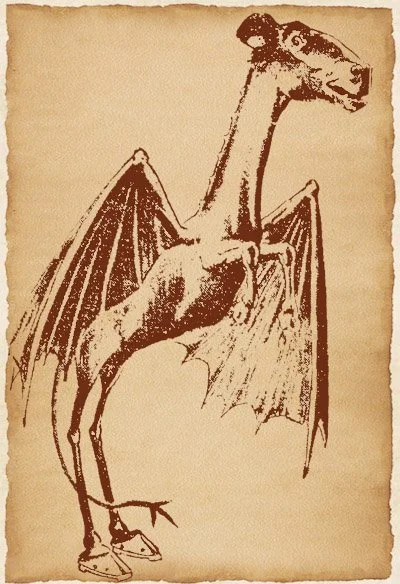
What was said then vs what was said now
The Jersey Devil didn't necessarily look like the creature we recognize today. The famous image evolved from eyewitness testimony, newspaper illustrations, folklore, and later artistic interpretation. In fact, some of the earliest witnesses described something considerably stranger—and considerably less consistent.
The Leeds Family
There is an important historical detail hidden beneath the folklore. The Leeds family actually existed. Leeds was a prominent family name in colonial New Jersey, and members of the family lived in the region associated with the legend. This historical connection gives the Jersey Devil story an interesting foundation. It does not prove the supernatural elements of the tale. But it suggests that the legend may have developed around real people and real families rather than appearing from nowhere. Some researchers have attempted to connect Mother Leeds with Deborah Leeds, the wife of Daniel Leeds, a colonial-era surveyor, cartographer, and publisher.Daniel Leeds is particularly interesting because his life became entangled with the religious and political controversies of colonial New Jersey. He was associated with almanacs and writings that sometimes included astrology, supernatural material, and imagery that could easily have contributed to later folklore. His reputation eventually became controversial. Over time, stories about the Leeds family became intertwined with stories about the Devil. Some versions of the legend even suggest that Daniel Leeds himself became associated with the creature. But this is where history and folklore begin to overlap in complicated ways. There is no historical record demonstrating that Daniel Leeds had a child that transformed into a winged monster. There is no credible evidence of a supernatural birth. What does exist is a real colonial family, a real regional history, and generations of stories that eventually became attached to the Leeds name. That distinction is important. The Jersey Devil story may have a historical foundation without the supernatural event itself being historical.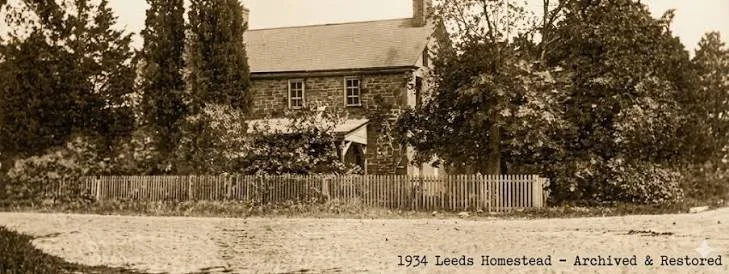
Daniel Leeds had surveyed land around Great Egg Harbor in the 1690s, and the land eventually became associated with the Leeds family and the community known as Leeds Point. Historical sources describe the area as part of the wilds of southern New Jersey.
A Name Is Born
For much of its early history, the creature may not have been widely known as the Jersey Devil. The name developed over time. Earlier versions of the folklore referred to the creature by other names, including variations of the Leeds Devil. The term "Jersey Devil" eventually became the dominant name. That change is significant because it transformed a local story into something much larger. The creature was no longer merely the monster supposedly born to a particular family. It became a creature belonging to an entire landscape. The Pine Barrens became its territory. The Jersey Devil became part of New Jersey itself. And that association has survived for generations.The Pine Barrens: A Perfect Home for a Monster
There is something about the Pine Barrens that seems almost designed for a cryptid legend. The forests can be dense. The ground can be sandy. The wetlands can be difficult to navigate. There are long stretches of road bordered by trees and darkness. At night, the landscape changes. A person who has spent most of their life in a city or suburb can find a forest surprisingly disorienting after sunset. There are no streetlights. No constant traffic. No illuminated buildings.Instead, there are sounds. Branches move. Leaves rustle. Animals call to one another. Wind moves through the trees. Water flows through streams and marshes. Sometimes a distant sound seems impossibly close. Other times something moving through the forest remains invisible.In such an environment, an ordinary animal can become extraordinary. And an extraordinary story can become almost inevitable. The Pine Barrens did not create the Jersey Devil by itself.But it gave the legend a stage.The Legend Grows
As the years passed, stories about the creature expanded. The Jersey Devil was said to be able to fly. It was described as extraordinarily fast. Some witnesses claimed it could walk on two legs. Others described four-legged movement. Its appearance varied. Sometimes it was said to resemble a horse. Sometimes a goat. Sometimes a large bird. Sometimes a reptile. Sometimes something completely unlike any known animal. These contradictions might seem like a weakness in the legend. From another perspective, they are exactly what we would expect from folklore. People do not all perceive strange things in the same way. Two witnesses standing beside each other might remember the same event differently. A person who sees something for only a few seconds in darkness is forced to reconstruct the image afterward. Fear changes perception. Memory changes with time. And once a person knows what they are supposedly looking for, descriptions can begin to resemble the established legend. The Jersey Devil may therefore have developed a recognizable "standard" appearance over time even though individual witnesses originally saw very different things.The Sightings
The history of the Jersey Devil would be interesting even if no one claimed to have seen the creature. But sightings are what transformed the legend from folklore into a modern cryptid mystery. There have been reports of strange encounters for generations. Some are little more than stories passed from one person to another. Others appeared in newspapers. Some involved multiple witnesses. A few became famous enough to attract organized searches. But none has produced the one thing that would settle the matter: A verified specimen. That is where the mystery begins.The January 1909 Panic
If there is one period that transformed the Jersey Devil into a national sensation, it was January 1909. Reports began appearing throughout southern New Jersey and neighboring areas. People claimed to have encountered a strange creature. There were reports of unusual tracks in the snow.There were accounts of mysterious sounds. Some witnesses described seeing a creature flying through the night. Others claimed it walked or ran across roads. The reports multiplied. And newspapers noticed. At a time when newspapers were one of the primary sources of information for the public, sensational stories could spread rapidly. One report inspired another. One witness's description influenced another. Soon, the Jersey Devil seemed to be everywhere. The creature was no longer simply a legend from the Pine Barrens. It had become news.Strange Footprints
Perhaps the most unsettling aspect of the 1909 reports was the alleged discovery of footprints.Snow had fallen across parts of the region, providing a natural canvas for anything walking through the landscape. Residents reported unusual tracks. Some accounts described footprints that appeared to continue across roads, rooftops, frozen surfaces, and other places where ordinary animals supposedly should not have been able to travel. The tracks became a central part of the panic. If the Jersey Devil had merely been seen in the distance, skeptics could argue that witnesses had misidentified an animal. But footprints appeared to be physical evidence. They could be photographed. They could be measured. They could be followed. Or at least, that was the impression created by the reports. The problem was that the tracks were not consistent.Some were later attributed to ordinary animals. Others were suspected to have been deliberately created. Some could not be conclusively explained. But unexplained does not automatically mean supernatural. That distinction would become one of the most important lessons of the Jersey Devil story.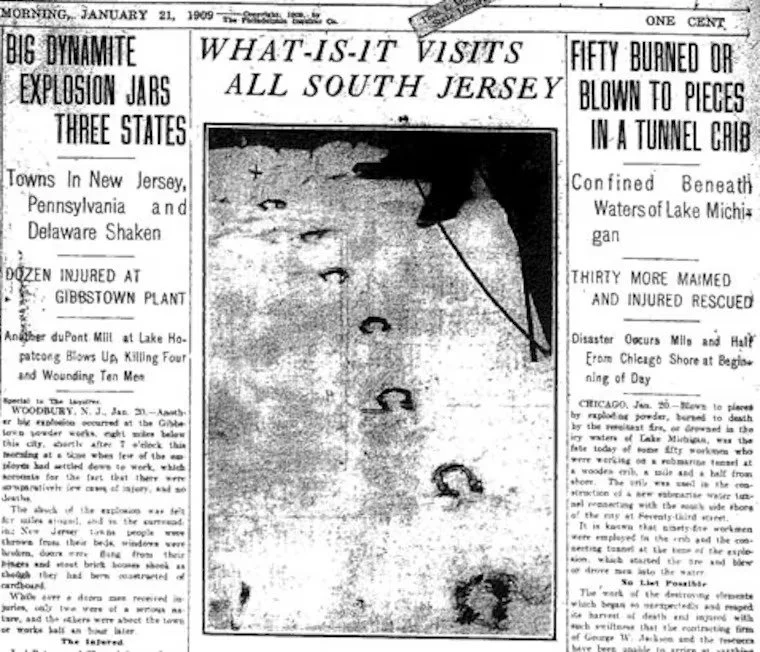
January 21 1909 wasn't just one sighting
The newspapers were reporting a whole collection of alleged encounters. One report from Mount Holly described William Cronk, who said he saw a large bird flying low across his lawn. He described long legs and wings with a span of approximately four feet. Another report from Riverside involved a man who claimed that a great bird with a horse-like face attacked his bulldog. Other reports came from Pemberton and surrounding communities. So by January 21, we have an important phenomenon developing:
People weren't describing exactly the same animal. One person saw something resembling a horse/crane hybrid. Another saw something resembling a large bird. Others described a strange, hairy, winged creature.
The Search Begins
As reports increased, people began searching for the creature. Police officers investigated. sightings. Residents organized groups. Hunters went into the woods. Curious spectators traveled to affected areas. The story had become a phenomenon. There was also a psychological feedback loop taking place. People heard that the Jersey Devil had been seen. They became alert for anything unusual. They heard an animal. They saw movement. They discovered tracks. They interpreted those events through the story they had already heard. The creature became more real because people expected to encounter it. This does not mean every witness was lying. It means that expectation can influence perception. And in January 1909, expectation was everywhere.The Fear Spreads
The reports became so widespread that some communities reportedly took extraordinary precautions. Schools were affected. Businesses became concerned. People avoided traveling alone at night. Weapons were carried by some residents who feared an encounter. The Jersey Devil had become more than an entertaining story. For a brief period, it became a genuine public fear. Newspapers helped intensify the situation. Sensational headlines attracted readers. Readers wanted more stories. More stories generated more sightings. And more sightings generated more headlines. The result was a self-sustaining phenomenon. Eventually, however, the panic subsided. No creature was captured. No body was discovered. No definitive physical evidence emerged. The Jersey Devil disappeared back into the shadows. But the story had changed forever.Sightings After 1909
The end of the 1909 panic did not mean the end of the Jersey Devil. Reports continued throughout the decades. People occasionally claimed to see strange creatures in the Pine Barrens and surrounding areas. Descriptions continued to vary. Some witnesses reported a tall, winged creature. Others described something smaller. Some claimed the creature was black. Others described gray, brown, red, or pale coloring. Some said it walked upright. Others described an animal moving on four legs. Some reported wings. Others did not. The creature sometimes appeared to be enormous. At other times, it was described as roughly the size of a large dog.These differences make the Jersey Devil difficult to classify. If every witness were describing the same biological animal, why would its appearance vary so dramatically? One possibility is that witnesses are seeing different things. Another is that the legend influences descriptions. And another, more speculative possibility is that the creature itself has characteristics that witnesses struggle to describe. There is no evidence proving that last possibility. But it remains one of the questions that keeps the mystery alive.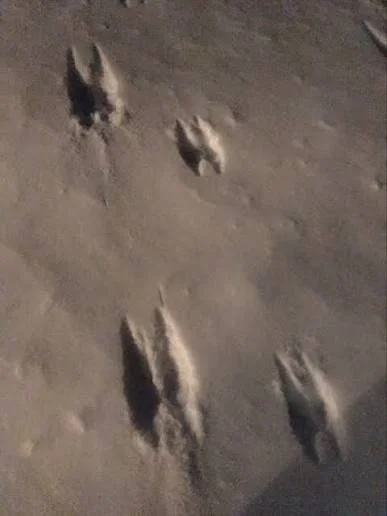
Modern footprint reports
There are occasional contemporary claims of unusual tracks in the Pine Barrens. For example, modern Jersey Devil researchers document finding unidentified tracks during field investigations, but even their own reports frequently acknowledge ordinary possibilities such as large dogs or other wildlife. In one investigation, researchers encountered deer tracks and other unidentified tracks that were considered most likely to have come from a large dog; rain had also distorted the prints.
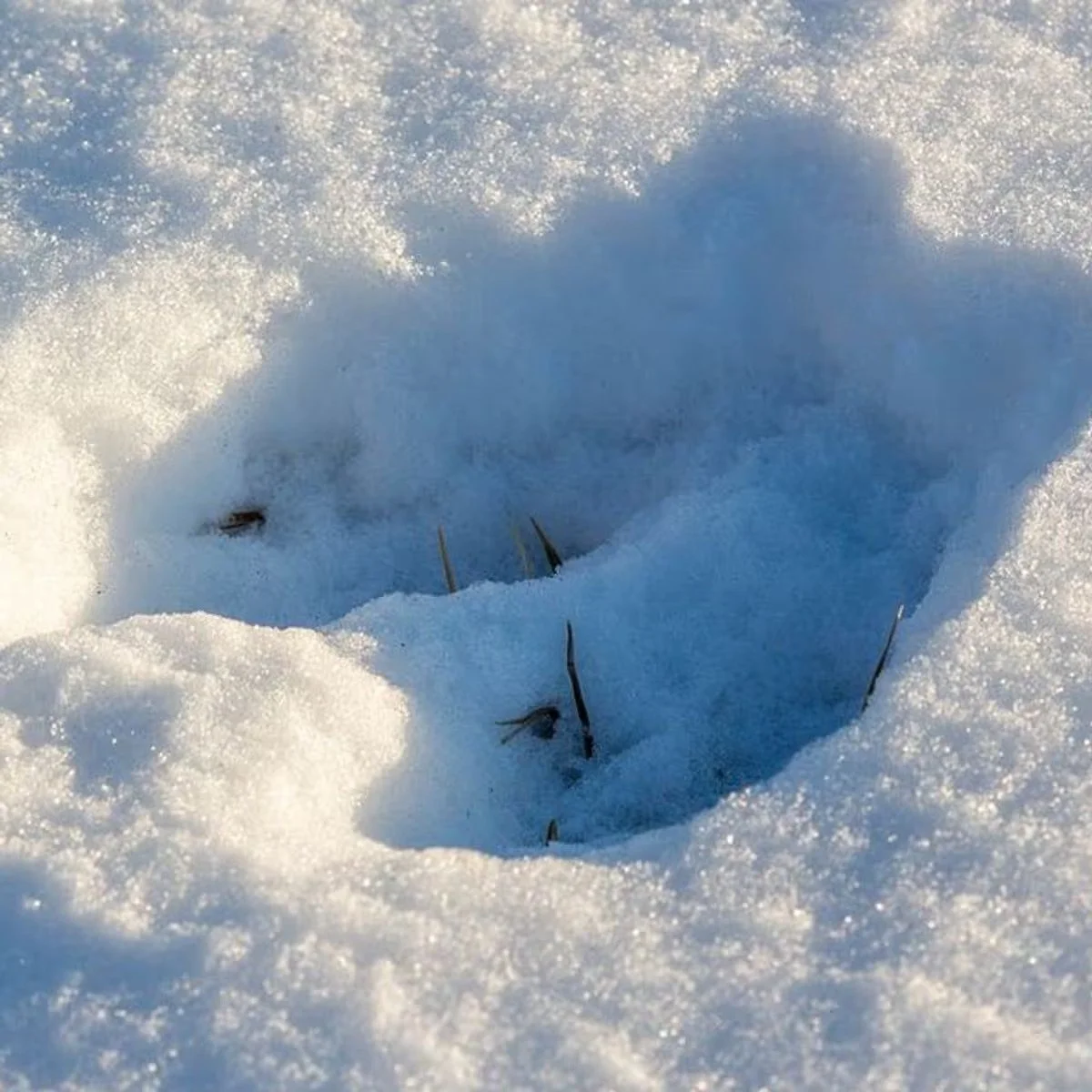
Here's the really important difference
1909:
Snow provided a huge number of tracks.
Newspapers reported them extensively.
Some tracks were supposedly followed for considerable distances.
There were claims of tracks crossing fences and appearing on rooftops.
The phenomenon became a major public event.
Today:
Reports are much more isolated.
Most alleged tracks are photographed rather than preserved.
Mud, sand, rain, and snow can distort prints.
Wildlife is abundant.
Hoaxing is always possible.
There is no authenticated Jersey Devil track recognized by zoologists.
And there's an interesting modern twist: we have vastly better technology now.
The Sounds of the Jersey Devil
Not every encounter involves a visual sighting. Some stories focus on sound. People have reported hearing screams, shrieks, cries, whistles, or strange vocalizations in the woods. This is particularly interesting because the Pine Barrens are home to animals capable of producing sounds that can be deeply unsettling. The call of a fox can resemble a human scream. Owls can produce haunting vocalizations. Coyotes can howl and yelp in ways that seem strangely coordinated. Even familiar animals can sound completely different when heard from a distance in darkness. A person unfamiliar with these sounds may have no frame of reference. A scream in the forest is simply a scream. And when the listener already knows the legend of the Jersey Devil, the mind naturally connects the sound to the creature. Still, not every reported sound has been identified. That leaves another small piece of uncertainty.The Evidence
The Jersey Devil is an unusual cryptid because the legend is supported by an enormous quantity of stories but very little verified physical evidence. There are photographs. There are footprints.There are eyewitnesses. There are newspaper articles. There are accounts passed down through families. There are investigations. “But” there is no confirmed body. No skeleton. No DNA sample. No captured animal. No specimen sitting in a museum. For a creature supposedly observed for centuries, that absence is difficult to ignore. At the same time, the lack of a specimen does not automatically prove that every sighting is false. It simply means that the case remains unproven…or is it…?Eyewitness Testimony
Eyewitness accounts are one of the most important forms of evidence in the Jersey Devil story.People have claimed to see the creature under a variety of circumstances. Some were alone. Some were with other people. Some reports occurred at night. Others occurred during daylight.Some witnesses were close enough to describe physical characteristics. Others saw the creature only briefly. Eyewitness testimony can be valuable. But human perception is not a perfect recording device. Memory is reconstructive. When we remember an event, we do not simply replay a video. We rebuild the event from fragments. Emotion, expectation, later information, and repeated storytelling can influence that reconstruction. This is particularly important in cryptid investigations. If someone sees an unfamiliar animal for three seconds in the darkness, they may remember the encounter as something much more dramatic years later. That does not necessarily mean they are lying. They may genuinely believe what they remember. The distinction between honest testimony and accurate testimony is crucial. A witness can be completely sincere and still be mistaken.The footprints
The footprints are perhaps the most famous physical evidence associated with the Jersey Devil. The 1909 reports described tracks that appeared strange enough to cause widespread concern. Some were said to resemble hoofprints. Others appeared more human-like. Some seemed to show unusual patterns. In certain accounts, the tracks appeared to continue across surfaces or distances that seemed difficult for an ordinary animal to navigate. But footprints can be surprisingly deceptive. Snow changes. Wind changes. Melting causes edges to disappear. One footprint can merge into another. An animal's gait can produce unusual patterns. And people can create tracks intentionally. The possibility of hoaxing was particularly important during the 1909 panic. Once people realized that unusual footprints could attract enormous public attention, the temptation to create them became obvious. Some alleged tracks were investigated and found to have ordinary explanations. Others remain part of the folklore. But none has ever been accepted by mainstream zoology as proof of an unknown animal.Photographs
Photographs are among the most powerful forms of modern evidence. They are also among the easiest to misunderstand. Over the decades, photographs claiming to show the Jersey Devil have circulated widely. Some depict distant shapes. Some show strange animals. Some are blurry. Others are obvious hoaxes. The problem with an unclear photograph is that uncertainty works in both directions. A blurry image cannot prove that something is the Jersey Devil. But it also cannot always prove that the object is something ordinary. Without enough resolution, context, or independent documentation, a photograph becomes an interpretation rather than proof. A dark shape in the woods can become almost anything once a viewer knows the story surrounding it.This is why serious investigations require more than simply asking whether an image looks strange.Investigators must ask:
Who took the photograph?When?Where?Under what circumstances?Was the original file preserved?Can the image be independently examined?Are there other photographs?Are there witnesses?Can the object be identified?Is there evidence of manipulation?Without answers to those questions, a photograph remains a photograph…interesting but inconclusive.Hoaxes
Hoaxes have always been part of the Jersey Devil story. Some were created for amusement. Others were apparently created for publicity. Some may have been intended to frighten people. Others took advantage of public fascination. This is not unique to the Jersey Devil. Cryptid history is filled with fabricated photographs, fake footprints, staged encounters, and elaborate stories. The existence of hoaxes creates an unfortunate problem for genuine witnesses. Once enough fake evidence exists, people become suspicious of everything. A legitimate photograph can be dismissed because previous photographs were fraudulent. A sincere eyewitness can be mocked because other people fabricated stories. The challenge is therefore not simply to collect evidence. It is to determine which evidence is trustworthy.Newspaper Evidence
The newspaper archives are among the most fascinating parts of the Jersey Devil case. The 1909 events were extensively reported. These articles provide something that many older cryptid legends lack:Contemporary documentation.We can examine what newspapers reported at the time.We can compare accounts.We can see how quickly the story spread.We can observe how descriptions changed.We can also see how sensational reporting influenced public perception.But newspapers are not perfect historical records. A newspaper article is evidence that someone reported something. It is not necessarily evidence that the reported event actually happened.Journalists in 1909 worked in a very different media environment. Competition for readers was intense. A frightening story sold newspapers. The Jersey Devil was therefore an ideal subject.That does not mean the reports were fabricated. It means they must be evaluated carefully.What We Actually Have
When all of the evidence is considered, the Jersey Devil case contains several categories of information:Historical evidence exists showing that the Leeds family and colonial communities associated with the legend were real.Folklore evidence exists showing that stories of the creature have been passed down for generations.Eyewitness evidence exists in large quantities.Newspaper evidence exists, particularly from 1909.Physical evidence has been claimed, especially footprints.Photographic evidence has been claimed.But there is no universally accepted biological evidence. That is the dividing line. The Jersey Devil remains a cryptid because the creature has never been scientifically established.Possible Explanations
If the Jersey Devil is not a supernatural creature, what could explain the reports? There is no single answer. The legend may have been created from several different sources. Ordinary animals, unusual environmental conditions, human psychology, folklore, hoaxes, and genuine unidentified sightings may all have contributed. The mystery does not necessarily require one explanation.Wildlife Misidentification
The simplest explanation for many cryptid sightings is often an ordinary animal. People are remarkably good at recognizing familiar objects under normal circumstances. But when visibility is poor, that ability can fail. A deer standing upright briefly can look strangely humanoid. A large owl flying toward a witness can appear enormous. A fox can sound like a screaming person. A horse viewed under unusual lighting can look bizarre. A large bird can appear to have unusual limbs. Even an animal that the witness knows perfectly well can become unfamiliar when seen unexpectedly. The Jersey Devil has sometimes been compared to animals such as cranes, owls, horses, deer, and other wildlife. The Pine Barrens contain enough biodiversity to provide numerous opportunities for misidentification.The Sandhill Crane Possibility
One explanation sometimes discussed in connection with Jersey Devil reports is the sandhill crane. These large birds have long legs, long necks, large wings, and unusual vocalizations. Under poor lighting, a crane standing in vegetation could potentially produce an extremely strange silhouette. In flight, its wingspan can make it appear much larger than expected. And its calls can sound prehistoric or otherworldly to someone unfamiliar with them. But there is an obvious problem. A sandhill crane does not explain every description of the Jersey Devil. It does not have horns. It does not have a horse-like head. It does not have a long reptilian tail. It does not walk like the creature described in some accounts. Therefore, it may explain some sightings without explaining the entire legend. That is an important distinction. A possible explanation for one sighting is not necessarily an explanation for all sightings.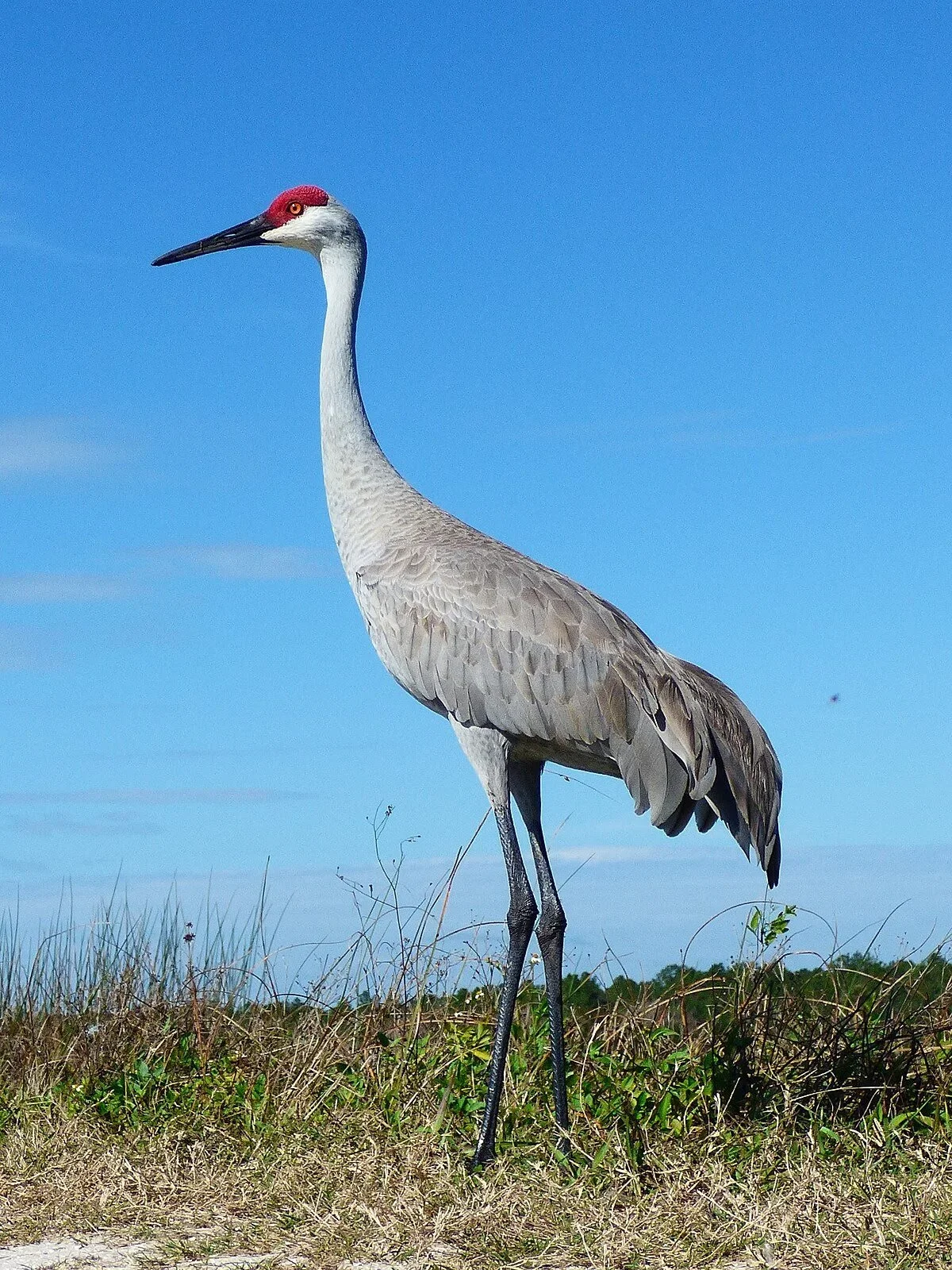
The Sandhill Crane
This is probably the most intriguing candidate because, at least visually, it can overlap with some historical descriptions of the Jersey Devil.
A mature sandhill crane stands roughly 3–4 feet tall and has a wingspan of approximately 5½–6½ feet. It has an unusually long neck, very long legs, a large body, and broad wings.
The Fox
Another interesting possibility is the red fox. Foxes are common in New Jersey. They are also capable of producing sounds that can be genuinely disturbing. A fox's scream can resemble the cry of a person. Someone hearing that sound for the first time in a dark forest might reasonably conclude that something strange was nearby. If that person already knew the Jersey Devil legend, the connection would be almost unavoidable. But once again, the fox cannot explain the physical descriptions of a winged creature. It can explain the sound. It cannot explain the monster.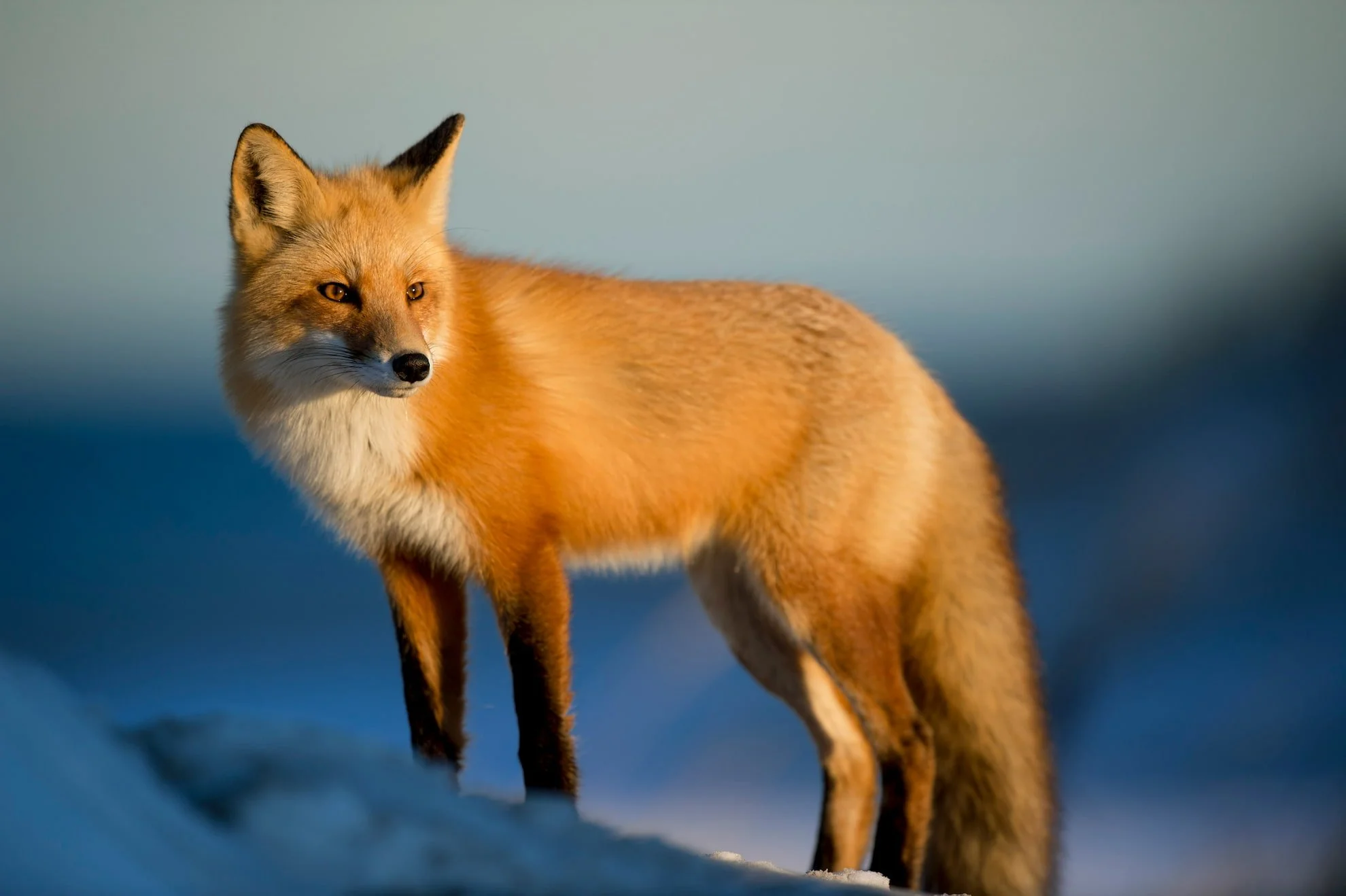
The Red Fox
The fox is much more interesting when we consider the sounds associated with the Jersey Devil. New Jersey has both red foxes and gray foxes, and both occur throughout the state. Foxes are also largely nocturnal or crepuscular, meaning they're most active around dusk and nighttime hours.
And then there's their voice. That matters because strange screams are one of the recurring elements of the Jersey Devil legend. The New Jersey Pinelands Commission itself describes the creature's legendary screams as one of the characteristics associated with reported encounters.
The Owl
Owls offer another possibility. Their silent flight is remarkable. A large owl emerging suddenly from darkness can be startling. Its eyes reflect light. Its wings can appear enormous at close range. And its calls can sound unnatural. For a person walking through a forest at night, an owl flying overhead could easily become one of those moments that feels impossible to explain. Again, this does not prove that every Jersey Devil sighting was an owl. It simply demonstrates how easily an ordinary animal can become extraordinary under the right circumstances.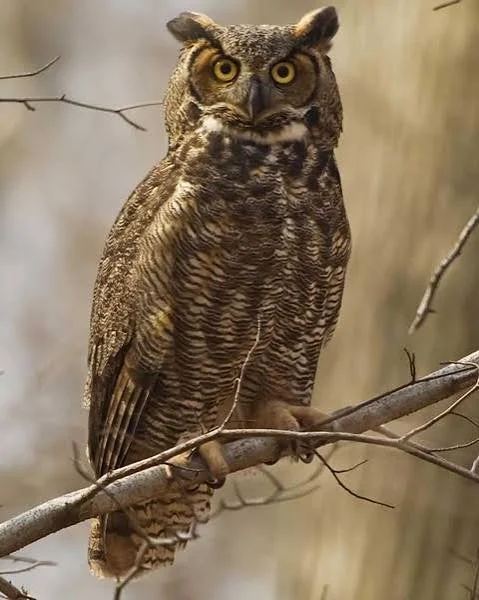
The Owl
They're nocturnal. They can fly silently. They can suddenly appear from darkness. Their eyes can reflect light. Their silhouettes can look strange when viewed against the night sky. And their calls can be completely unfamiliar to someone who isn't accustomed to them. A large owl flying toward or away from a person can briefly create a very unusual visual impression. Wings can appear enormous when viewed at close range, while the bird's body can disappear into the darkness.
The Pine Barrens Itself
Perhaps the environment deserves more attention. The Pine Barrens are not simply a backdrop for the legend. They may be part of the explanation. The forest changes dramatically depending on weather, season, time of day, and visibility. Fog can obscure distances. Snow can distort footprints. Wind can carry sounds in strange directions. Darkness eliminates visual information. Dense vegetation hides animals. Water reflects and distorts light. A person who is already frightened becomes even more vulnerable to misinterpretation. The forest creates uncertainty.And uncertainty is fertile ground for mystery.Human Psychology
One of the most fascinating explanations for the Jersey Devil involves the human mind. Humans are pattern-seeking creatures. When information is incomplete, our brains attempt to fill in the missing pieces. This ability is extremely useful. It allows us to recognize a person from a silhouette. It allows us to identify danger quickly. It allows us to make decisions with incomplete information. But the same ability can also produce false conclusions. If someone sees a strange shape in the woods and already knows the Jersey Devil story, their brain may unconsciously interpret the shape according to that expectation. The process can happen in seconds. Something moves. The witness becomes frightened. The brain searches for an explanation. The Jersey Devil is already available. The mysterious shape becomes the creature. The witness may later remember not merely seeing something strange but seeing something that clearly had horns, wings, a tail, and claws. This is not necessarily deliberate exaggeration. It may be normal human perception operating under extraordinary conditions.Mass Hysteria
The events of 1909 also raise the possibility of mass hysteria—or what might more carefully be described as collective fear and expectation. Once enough people believed that the Jersey Devil was active, reports multiplied. Every strange sound could become evidence. Every footprint could become evidence. Every unusual animal could become evidence. The newspapers amplified the effect. This created a feedback loop:A sighting generates a story.The story generates fear.Fear increases attention.Increased attention produces more reports.More reports create more stories.The creature appears to become increasingly real. This phenomenon does not require everyone involved to be dishonest. People can sincerely report experiences that have been influenced by expectation. The same principle has appeared in many other mysterious events throughout history.Hoaxes and Practical Jokes
Some encounters may simply have been fabricated. Humans have always enjoyed frightening one another. The Jersey Devil provides an excellent opportunity. The Pine Barrens provide the setting.The legend provides the monster.And darkness provides cover.A person can create footprints, make strange sounds, move through the woods, or stage an unusual sighting and then watch the story spread. Once a legend becomes famous, hoaxes become almost inevitable. This means that the Jersey Devil phenomenon probably contains a mixture of genuine uncertainty and deliberate deception. The difficulty is determining which is which.The Cryptozoological Possibility
There is another possibility that cannot be ignored if the subject is being examined from a cryptozoological perspective. What if at least some sightings involved an unknown animal?Cryptozoology is the study—or, more precisely, the investigation—of animals whose existence has not been scientifically established. History provides examples of animals that were once poorly known to science and later confirmed. However, that does not mean every cryptid is real. The fact that unknown species exist does not provide evidence for any particular creature. For the Jersey Devil to represent an undiscovered animal, several difficult questions would need to be answered. What kind of animal is it? Where does it live? What does it eat? How does it reproduce? Why has no body been recovered? Why has no skeleton been discovered? Why has no biological material been conclusively identified? Why are descriptions so inconsistent? How could a breeding population remain hidden for centuries in a region surrounded by millions of people? These are serious obstacles. Still, they do not eliminate every theoretical possibility. The world is full of biological surprises. But possibility is not proof. And that distinction must remain at the center of any responsible investigation.The Mystery Remains
The Jersey Devil has survived for more than three centuries. That fact alone is remarkable. Legends disappear. Names are forgotten. Stories lose their power. Yet this one continues. The creature remains part of New Jersey's identity. It appears in books, documentaries, television programs, podcasts, artwork, merchandise, local folklore, and countless conversations. People still travel through the Pine Barrens wondering whether the old stories might contain a fragment of truth. Perhaps that is because the Jersey Devil is not really just a creature. It is a question.What If the Legend Is All There Is?
There is nothing wrong with concluding that the Jersey Devil is folklore. In fact, the evidence strongly supports the idea that folklore has played a major role in creating and sustaining the legend. The Mother Leeds story has changed over time. Descriptions of the creature vary. Many pieces of physical evidence have been challenged. Hoaxes are documented. Ordinary animals provide plausible explanations for some encounters. Human perception provides another. From a scientific perspective, there is currently no verified evidence demonstrating that a creature matching the traditional description of the Jersey Devil exists. That should be stated plainly. But there is another question. Does explaining some sightings explain all of them? Not necessarily.The Unexplained Is Not Automatically Supernatural
This is perhaps the most important lesson of the Jersey Devil, or any other cryptid in general. Something can be unexplained without being supernatural. A person may genuinely see something they cannot identify. A photograph may remain inconclusive. A strange footprint may have an unknown origin. A sound may go unidentified. None of these automatically proves a monster. But neither does uncertainty automatically mean that the witness is lying. There is a middle ground between belief and disbelief. That middle ground is investigation. It is the willingness to say: “I don't know.”For a mystery, those three words can be more honest than either "definitely real" or "definitely fake."Why Do People Still Search?
The Pine Barrens continue to attract people fascinated by the Jersey Devil. Some are looking for evidence. Some are looking for adventure. Some are interested in folklore. Some simply want to experience the landscape associated with one of America's most famous monsters. And some genuinely believe that something is out there. The search itself has become part of the legend. Every generation inherits the story and adds something of its own. The Jersey Devil of the eighteenth century was not exactly the same creature described in 1909. The creature of 1909 is not exactly the creature described today. The legend evolves. But the central idea remains unchanged:Something is out there.A Monster Born From Fear
Perhaps the Jersey Devil was born from fear. Fear of the wilderness. Fear of childbirth. Fear of the unknown. Fear of creatures hiding beyond the edge of civilization. Colonial settlers lived in a world where the boundaries between the known and unknown were much closer than they are today. The forest was not a recreational space. It could be dangerous. Weather could kill. Animals could attack. Illness could arrive without warning. The supernatural was woven deeply into many people's understanding of the world. A story about a monstrous child born in the wilderness would have had tremendous power. Over generations, the story changed. But the fear remained.A Monster Born From the Forest
Or perhaps the Jersey Devil represents something even older. Every culture has stories about creatures that live beyond the boundaries of ordinary society. Monsters inhabit forests. Demons live in wilderness. Spirits haunt mountains. Unknown animals lurk in lakes. The pattern is universal. The unknown becomes a creature. The creature becomes a story. The story becomes a warning. And eventually, the warning becomes folklore. The Jersey Devil fits comfortably into this ancient human tradition. But there is something uniquely American about it as well. It is not a dragon from medieval Europe. It is not a monster from an ancient civilization. It is a creature of the New Jersey Pine Barrens. It belongs to a specific landscape. And perhaps that is why the legend remains so powerful.The Case for the Unknown
There is a temptation when discussing cryptids to choose sides. Either the creature exists, or it does not. Either the witness is telling the truth or the witness is lying. Either the photograph proves everything or proves nothing. Reality is rarely that simple. A witness can be sincere and mistaken. A photograph can be genuine but misidentified. A footprint can be real but produced by an ordinary animal. A legend can be fictional while being inspired by a real event. And occasionally, something genuinely unknown can remain unidentified. That is where the Jersey Devil becomes interesting. Not because we can prove the creature exists. We cannot. But because the story sits at the boundary between documented history and unexplained experience.The Devil in the Pine Barrens
Imagine walking through the Pine Barrens at night. The road disappears behind you. The trees close in. There are no houses nearby. No traffic. No voices. Only the wind. Then you hear something—a scream. You stop. The sound comes again, somewhere beyond the trees. You can’t see anything. You wait. Nothing. Then you hear movement. Something is walking through the brush. You shine your light toward the sound. For a moment, you see a shape. It is tall. It seems to have wings. Then it disappears. You stand there trying to make sense of what you saw. Was it a bird? A deer? An animal moving strangely? A trick of light? A shadow? Your imagination? Or something else? That moment—the moment between certainty and uncertainty—is where the Jersey Devil lives.The Mystery Remains
After more than three hundred years, we still do not have a definitive answer. The Jersey Devil has never been captured. No verified specimen has been produced. No scientific examination has confirmed the existence of a creature matching the traditional descriptions. The historical origins of the legend remain complicated. The Mother Leeds story contains elements of folklore that cannot be independently verified. Many reported sightings have plausible explanations. Some alleged evidence has been exposed as fraudulent. Other reports remain unresolved. And that leaves us with an uncomfortable but fascinating conclusion:We do not know exactly what happened in every Jersey Devil encounter.
Perhaps that is all the mystery requires. The Jersey Devil may be nothing more than an extraordinary piece of American folklore—a story shaped by generations of fear, imagination, misunderstanding, and the strange beauty of the Pine Barrens. Or perhaps somewhere within the hundreds of reports is a genuine encounter with something that has never been properly identified. If that is true, the question becomes even more interesting.Not “Is the Jersey Devil a demon?”Not “Is the Jersey Devil a monster?”But:What did those people actually see?
That question cannot be answered by belief alone. It cannot be answered by dismissing every witness. And it cannot be answered simply because a story has survived for centuries. It requires evidence. It requires investigation. And perhaps most importantly, it requires the willingness to remain curious when the evidence does not give us a comfortable answer. The Pine Barrens are still there. The forests still stretch across southern New Jersey. The roads still disappear into the darkness. Animals still move beneath the trees. Strange sounds still travel through the night. And somewhere, perhaps, the old legend continues to walk—or fly—through the imagination of those who enter the forest looking for it. Maybe the Jersey Devil is nothing more than a story. Maybe it is a story built around misunderstood animals, human psychology, and centuries of folklore. Maybe every strange footprint has an explanation. Maybe every scream belongs to an ordinary creature. Maybe every shadow is simply a shadow. Or maybe, somewhere beyond the edge of what we know, there is still something waiting to be discovered. Until someone finds the answer, the legend remains. And the Pine Barrens keep their secret.